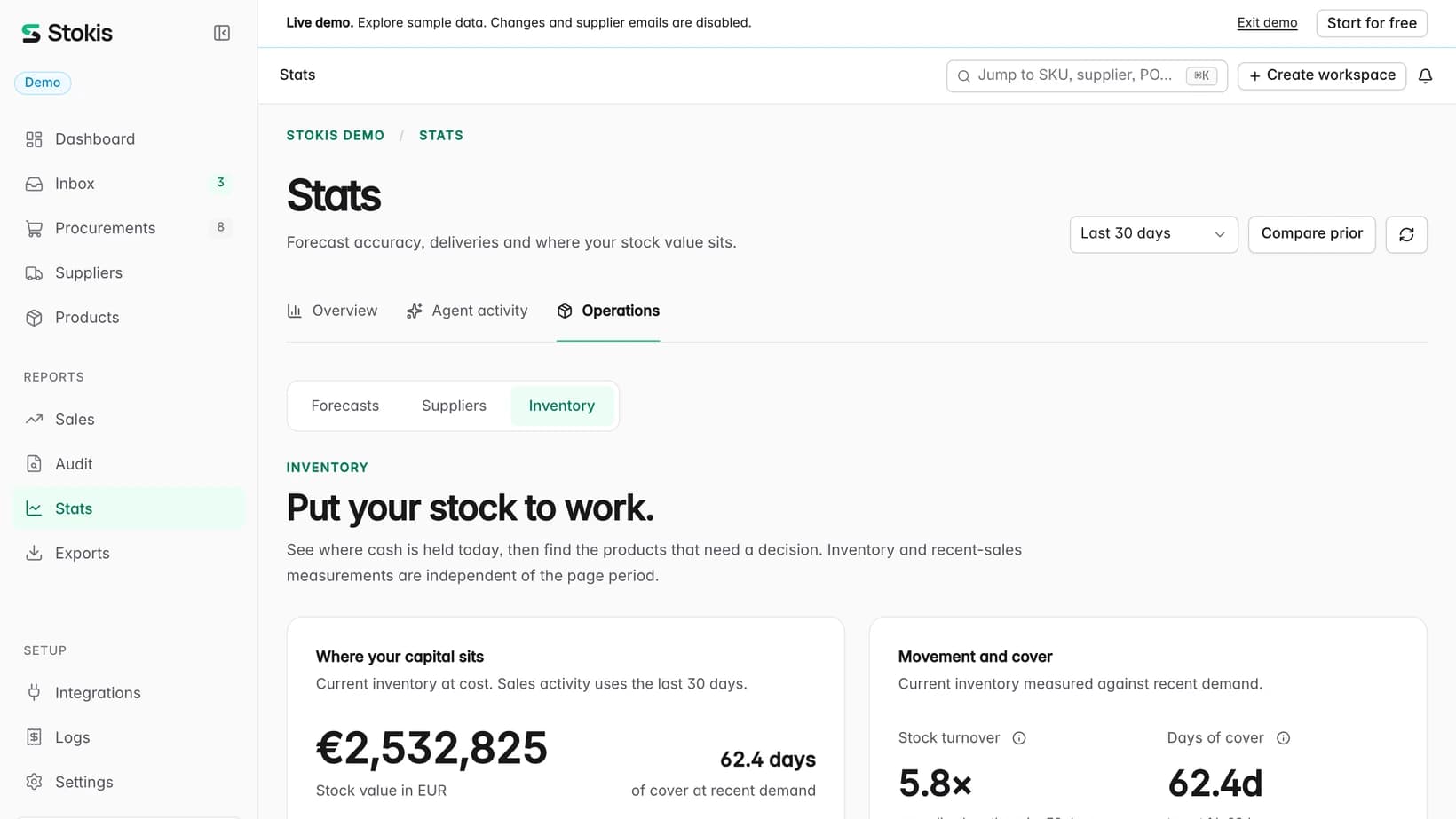
Inventory turnover ratio: how to work it out for every product
The inventory turnover ratio is cost of goods sold divided by average inventory. Here is how to work it out for each product, and what a whole-shop average hides.
Working notes for small e-commerce operators. What we ship, how to wire it up, and what we learn along the way.
Three kinds of posts:
PrestaShop how-tos. Concrete walkthroughs for operators running real stores — connecting inventory, fixing syncs that drift, getting clean exports for your accountant. We test everything on a live shop before it goes up.
Procurement notes. What we've learned running supplier orders at scale: reorder timing, MOQ tradeoffs, when to override a forecast, how to read supplier reliability without overreading it. We publish what worked, what didn't, and what we changed our mind about.
Product updates. Release notes for the people actually using Stokis. When we ship something new, you'll see it here first. When we drop a feature, you'll see that too.
You won't find SEO filler, AI hype, or recycled “ultimate guides”. If a post wouldn't help someone get a reorder out the door on Monday morning, we don't write it.
There's an RSS feed if you'd rather not check back.
The inventory turnover ratio is cost of goods sold divided by average inventory. Here is how to work it out for each product, and what a whole-shop average hides.
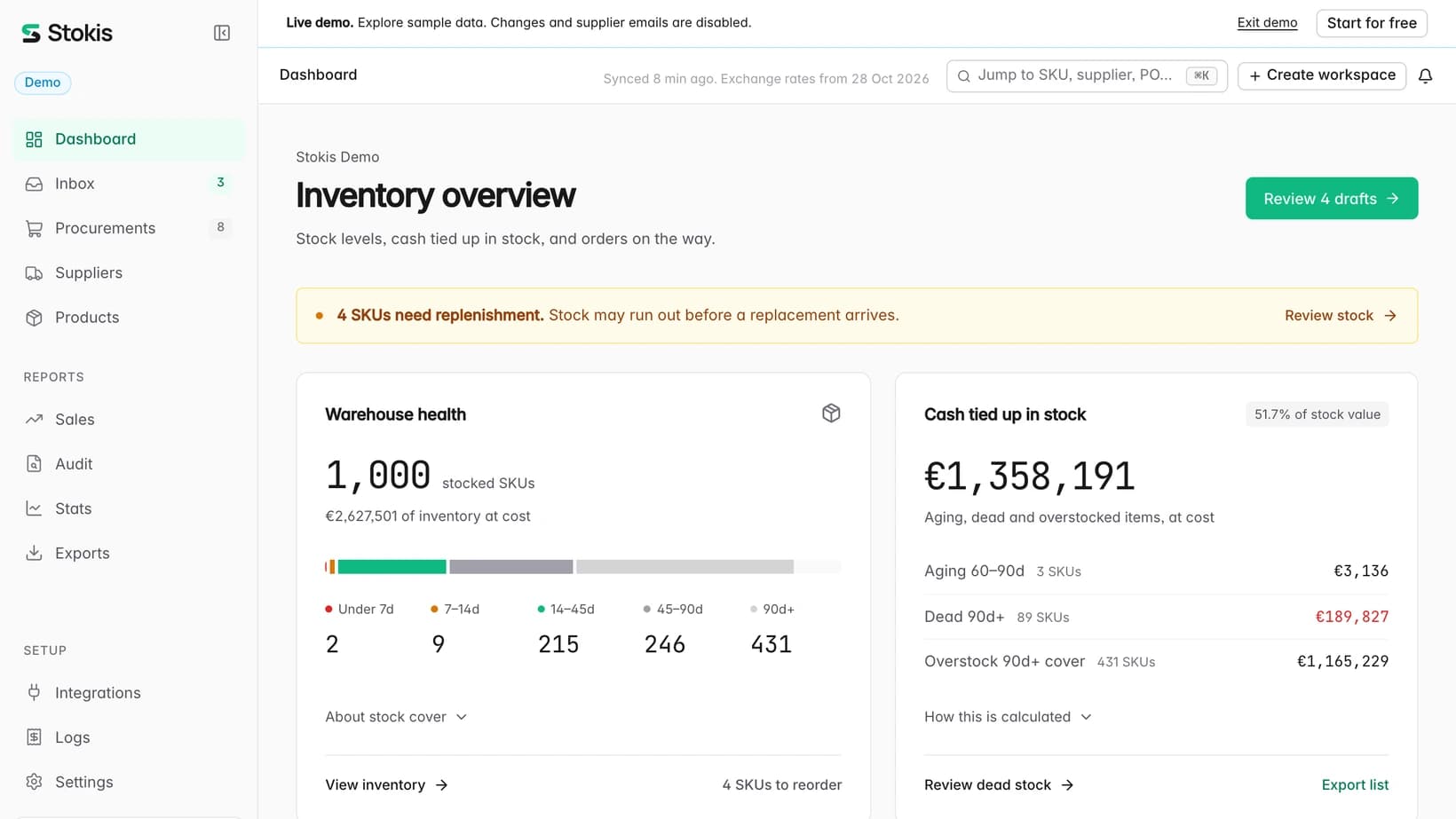
The inventory days formula is average inventory ÷ cost of goods sold × 365. A shop needs it per product: stock on hand ÷ daily sales, sorted into five bands that say what to order and what to stop ordering.
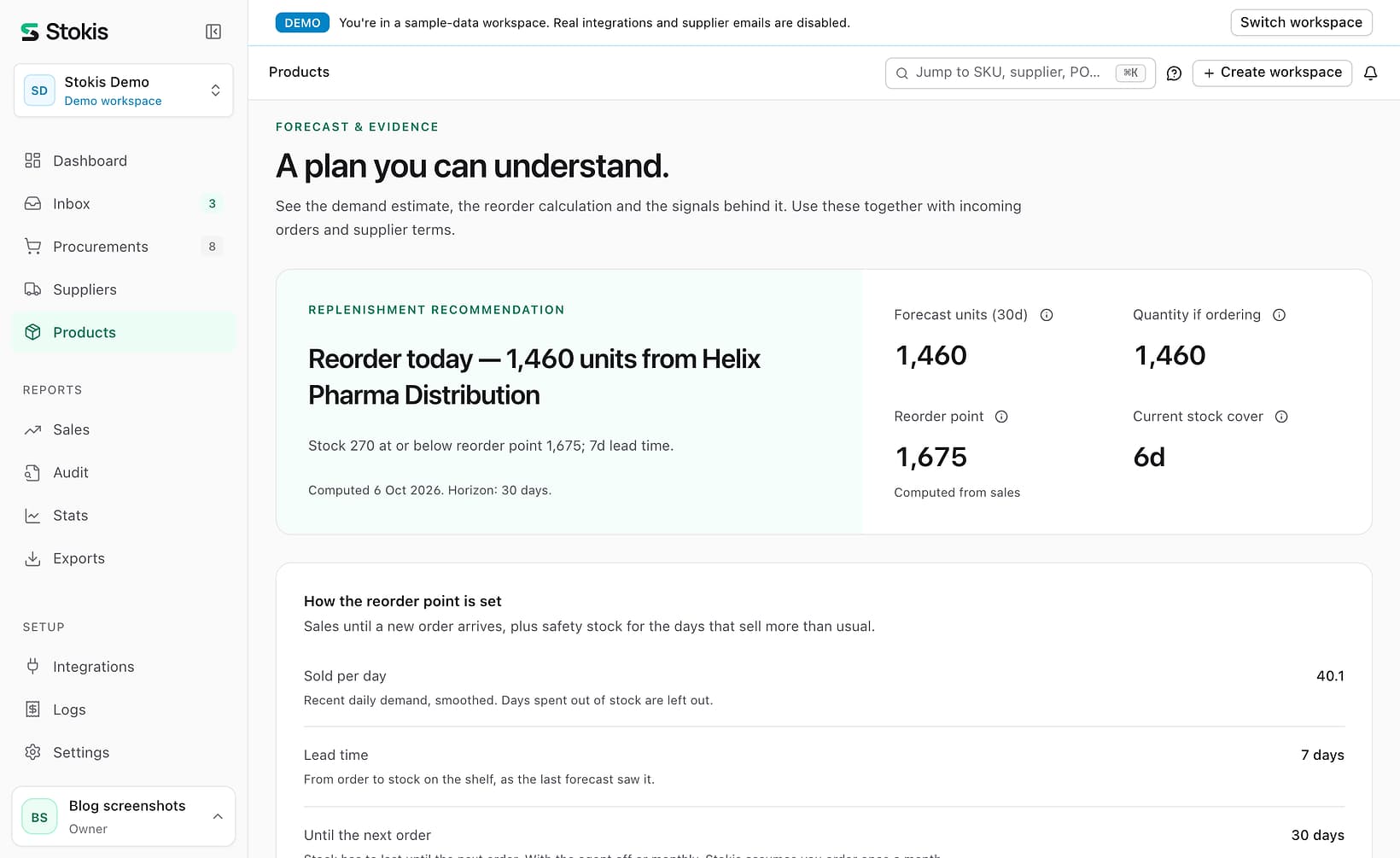
The reorder point formula is daily sales × (lead time + days until your next order) + safety stock. Here it is applied to a real catalogue, with the mistakes that cause stockouts.
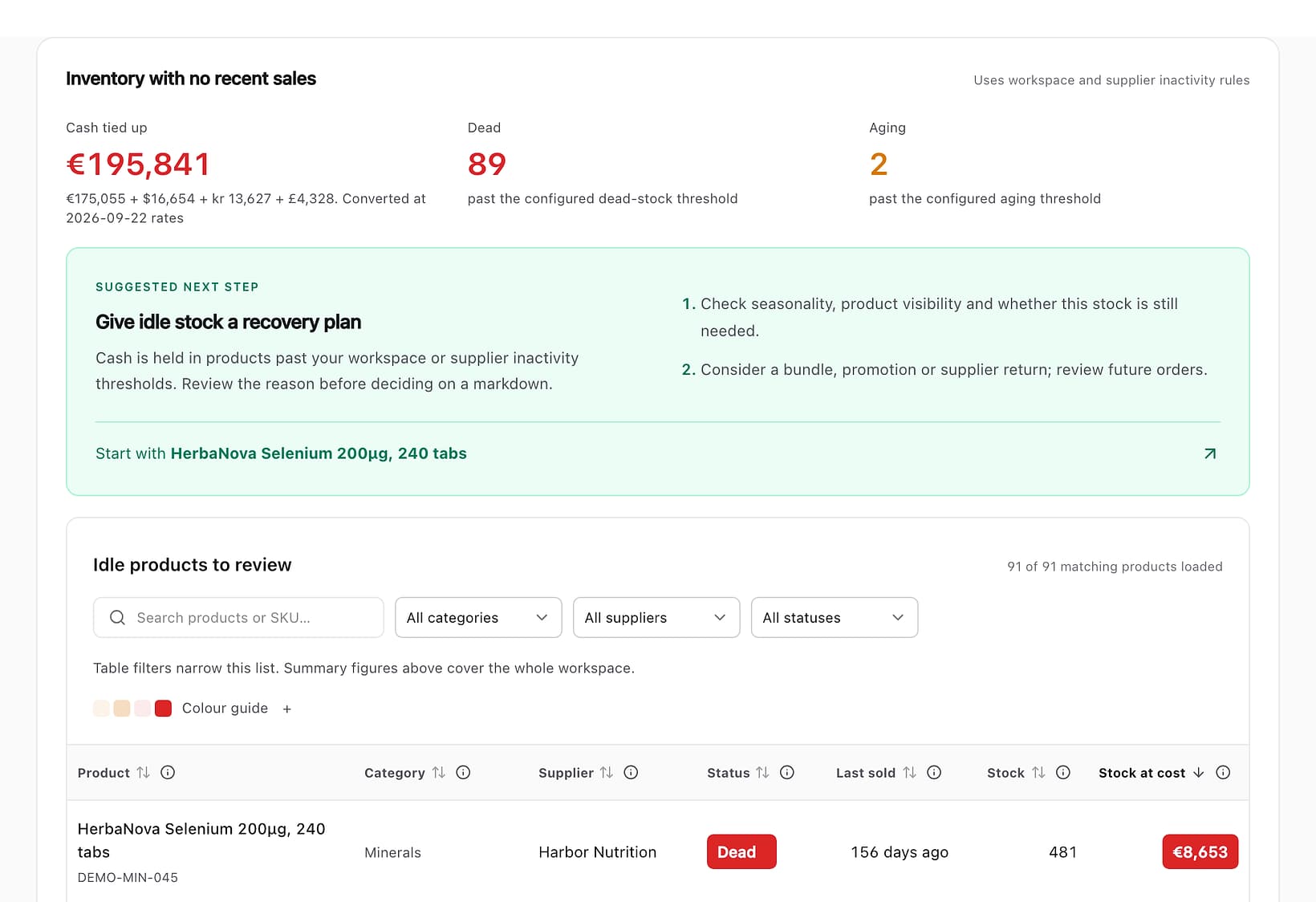
Dead stock is stock that has stopped selling. Here is how to find it from your own order history, what it costs you to keep, and what to do with each product.
Makers do not have a supplier lead time. They have a production lead time plus transit. Here is how to set it in Stokis and what changes downstream.